Tuesday, May 7, 2013

"Madame Restell" (Ann Trow Lohman), born May 6, 1812


Ann Caroline Trow was born in Painswick, Gloucestershire, England.  Her father, John Trow, was a woolen mill laborer. 


 Painswick, Gloucestershire, England
At the age of fifteen she started work as a maid in a butcher's family.

At sixteen she married a Wiltshire tailor named Henry Summer. Their daughter, Caroline, was born in 1830.  After three years living in England, they emigrated to New York in 1831.  

Soon after settling on Williams Street in Lower Manhattan, Summer died of yellow fever in June 1831.  A widow with an infant daughter, Ann made a poor living as a seamstress, doing piecework in her home. 

She was 49 years old when the Civil War began.

New York City, 1830s
Ann Trow Summer married again in 1836, to a  German-Russian immigrant, Charles Lohman, born in Russia of parents of German descent.  Lohman worked in the printing trade; he was a radical and freethinker, a friend and colleague of George Matsell, the publisher of the radical journal The Free Inquirer.  With Matsell, Lohman was involved in the publication of Robert Dale Owen's book, Moral Physiology; or, a Brief and Plain Treatise on the Population Question(1831) and Charles Knowlton's Fruits of Philosophy; or, The Private Companion of Young Married People (1831).

Ann's brother, Joseph Trow, had also emigrated to New York, and was working as a sales assistant in a  pharmacy.  After her marriage, Ann began to develop an interest in women's health, selling patent medicine, and (probably in partnership with her husband and brother) creating birth control  products, advertised under the name "Madame Caroline Restell". Her husband  wrote all her advertising copy, and took the pseudonym "Dr. Mauriceau".  Together they concocted a story of a trip to Europe where Ann allegedly trained as a midwife with her grandmother, a renowned French physician named Restell.


Mrs. Restell’s famous Female Monthly Pills, which by May 1839 were advertised as such:

FEMALE PILLS.—MRS. RESTELL, Female Physician, informs the ladies that her pills are an infallible regulator of ******. They must not be used when ********. Prepared and sold only by herself. [Sun, December 29, 1840]
The redacted words would have been “menses” and “pregnant.”


Restell Advertisement
Clients arrived at her Greenwich Street office from 9 a.m. to 10 p.m., and if they couldn’t seek treatment in person, Restell responded by mail, sending Preventative Powder at $5 per package or Female Monthly Pills, $1 apiece. Her pills (as well as those of her competitors) were commercialized traditional folk remedies that had been around for centuries, and were occasionally effective. Restell counted on clients returning for surgical abortions if the abortifacients failed—$20 for poor women, $100 for the rich.

In addition to selling abortifacients, she opened a boardinghouse where clients with unwanted pregnancies could give birth in anonymity. For an additional fee, she facilitated the adoption of infants. By leasing a nearby residence and adjoining office, they were able to open a full-fledged “lying-in hospital” where women in advanced pregnancy could give birth under supervision. The Lohmans, then, were not merely “abortionists;” they were amateur obstetricians, providing a broad range of services that the women of New York were not finding elsewhere.

Restell's success in her practice reflected tensions inherent in the social life of New York. Many middle- or even upper-class women sought to curb family size, a preferred strategy for the maintenance of financial and social security. It was from the more genteel, middle- and upper-class reading public that Madame Restell sought her clientele.

Over a forty-year period, she illicitly provided both surgical abortion and abortifacient pills in the northern United States. She began her business in New York in the late 1830s, and by the 1840s, had expanded to include franchises in Boston and Philadelphia.  Her business was one of a number at the time, and like the others was under constant attack by the press.  Newspaper editor Horace Greeley criticized the newspapers that accepted advertisements by Restell,   The National Police Gazette also refused her advertisements.


The papers targeted Restell as an agent of the change and sexual liberation that made their world seem so frighteningly uncontrollable. The conservative editor of the New York Sunday Morning News, Samuel Jenks Smith, wrote on July 7, 1839 of Restell's practice as a "monstrous and destructive " service that "strikes at the root of all social order -- is subversive of all family peace and quiet....will demoralize the whole mass of society, and make the institution of marriage a known farce." 

Restell subverted the public's eye on the press itself, and responded with her own editorial on July 15, 1839, in the New York Herald.  In her editorial, she challenged Smith to press charges against her, and offered $100 to anyone who could prove that her medicine was harmful:
I cannot conceive how men who are husbands, brothers or fathers can give utterance to an idea so intrinsically base and infamous, that their wives, their sisters, or their daughters, want but the opportunity and "facility" to be vicious, and if they are not so, it is not from an innate principle of virtue, but from fear. What! Is female virtue, then, a mere thing of circumstance and occasion?
A month later, there was a warrant which indicted Madame Restell for procuring abortion. Her bail was set for $2,000, and she spent the night in jail. Through a series of legal maneuverings, the charge was never prosecuted, and Restell was released. The witness never pressed charges.


"The Tombs", Site of hearings and imprionment for Madame Restell
When Madame Restell began her practice, New York State law regarding abortion reflected contemporary folk wisdom, which held that a fetus wasn’t technically alive until “quickening”—the moment when the mother felt it first move inside the womb, usually around the fourth month. An abortion before quickening was legal, but an abortion after quickening was considered to be second-degree manslaughter. Restell tried to determine how far along a patient was in her pregnancy before offering her services; if she intervened too late, she risked a $100 fine and one year in prison.

She had her first major brush with the law in 1840, when a 21-year-old woman named Maria Purdy lay on her deathbed, suffering from tuberculosis. She told her husband she wished to make a confession: While pregnant the previous year, she decided she didn’t want to give birth again; they had a ten-month-old child and she couldn’t handle another so soon. She had visited Restell’s office on Greenwich Street and joined several women waiting in the front parlor. When her turn came, Restell listened to her story and gave her a small vial of yellow medicine in exchange for a dollar.  
Purdy took one dose that night and two the next day but then stopped, suddenly worried about the potential consequences. A doctor analyzed the medicine and concluded it contained oil of tansy and spirits of turpentine and advised her to never take it again. She returned to Restell, who told her that for $20 an operation could be performed without pain or inconvenience. Purdy had no cash, and instead offered a pawn ticket for a gold watch chain and a stack of rings, which Restell accepted. She led Purdy behind a curtain to a darkened room, where a strange man—not Restell’s husband—placed his hands on her abdomen and declared she was only three months along (if Purdy was past the first trimester, she didn’t correct him). She had the surgery, and was convinced that her present illness was a result. After hearing her deathbed confession her husband went to the police, who arrested Restell and charged her with “administering to Purdy certain noxious medicine… [and]… procuring her a miscarriage by the use of instruments, the same not being necessary to preserve her life.”

The case launched a debate that played out in the press, and the debate was as charged as it is today. One anti-abortion advocate called Restell “the monster in human shape” responsible for “one of the most hellish acts ever perpetrated in a Christian land.” She was a threat to the institution of marriage, allowing women to “commit as many adulteries as there are hours in the year without the possibility of detection.” She encouraged prostitution by removing the consequences. She allowed wives to shirk the duties of motherhood. She insulted poor women by providing abortions when they could seek aid and solace from their church. She not only abetted immoral behavior but also harmed misguided and naïve women, acting as a “hag of misery” preying upon human weakness. 

In March, 1841, she was again arrested. The police had set a snare by finding a young woman to testify against her. The testimony was in the papers the next morning, and in another series of legal maneuverings, Restell was accused of aiding and abetting an unknown person for procuring an abortion. Her bail was set for $5,000, and she went to jail.  Ultimately, Restell was found guilty. When her layers appealed, the court ruled that the deposition was improper and it was decreed that a new trial should be granted. By this time, however, the witness had died, and eventually in 1844 the indictment was formally dropped.

Throughout the years between her arrest and the dropping of the indictment, Restell was arrested twice, once on an abortion charge, and another time on a child-napping case, in which she was accused of deceiving a woman by putting her child up for adoption. These unsuccessful attempts at snaring Restell revealed in the process of their testimonies that both married and single women had need of her services.  For example, a widow who was a mistress of a bank president, a young wife and her much older husband, a seduced factory worker, the mistress of a congressman, and a victim of incest, all found themselves in pregnant and in need of Madame Restell.


Mary Roger's Body in Hudson River
In 1841, Mary Rogers was found dead in the Hudson River. Newspapers suggested that she had died during an abortion carried out by Restell, although later evidence seems to contradict this.  Public scrutiny of Restell continued unabated—she was accused in the press, on the basis of an anonymous letters, of performing a fatal abortion on Mary Rogers, the real-life inspiration for the title character in Edgar Allan Poe’s The Mystery of Marie Roget,  but Restell managed to avoid legal trouble 

The Congress of New York State enacted a new law against abortion which made the woman herself liable for 3 to 12 months in prison, in addition to a fine. Seemingly overlooked was the fact that this provision had the effect of discouraging any woman herself who had an abortion from testifying in prosecution against an abortionist.

Restell on cover of National Police Gazette as "Bat Woman"

Gazette investigators assisted the New York police in posting officers around Restell's house. On September 10, 1847, Restell was arrested for procuring an abortion for Marie Bodine. The trial was the scandal of the day, its drama heightened by the fact that the only women in the courtroom were the witness and Madame Restell. The testimony given was detailed and intimate, and the cross-examination was rigorous, with rampant character assassination. This time the prosecution was successful, and Madame Restell was sentenced to a year at Blackwell's Island.

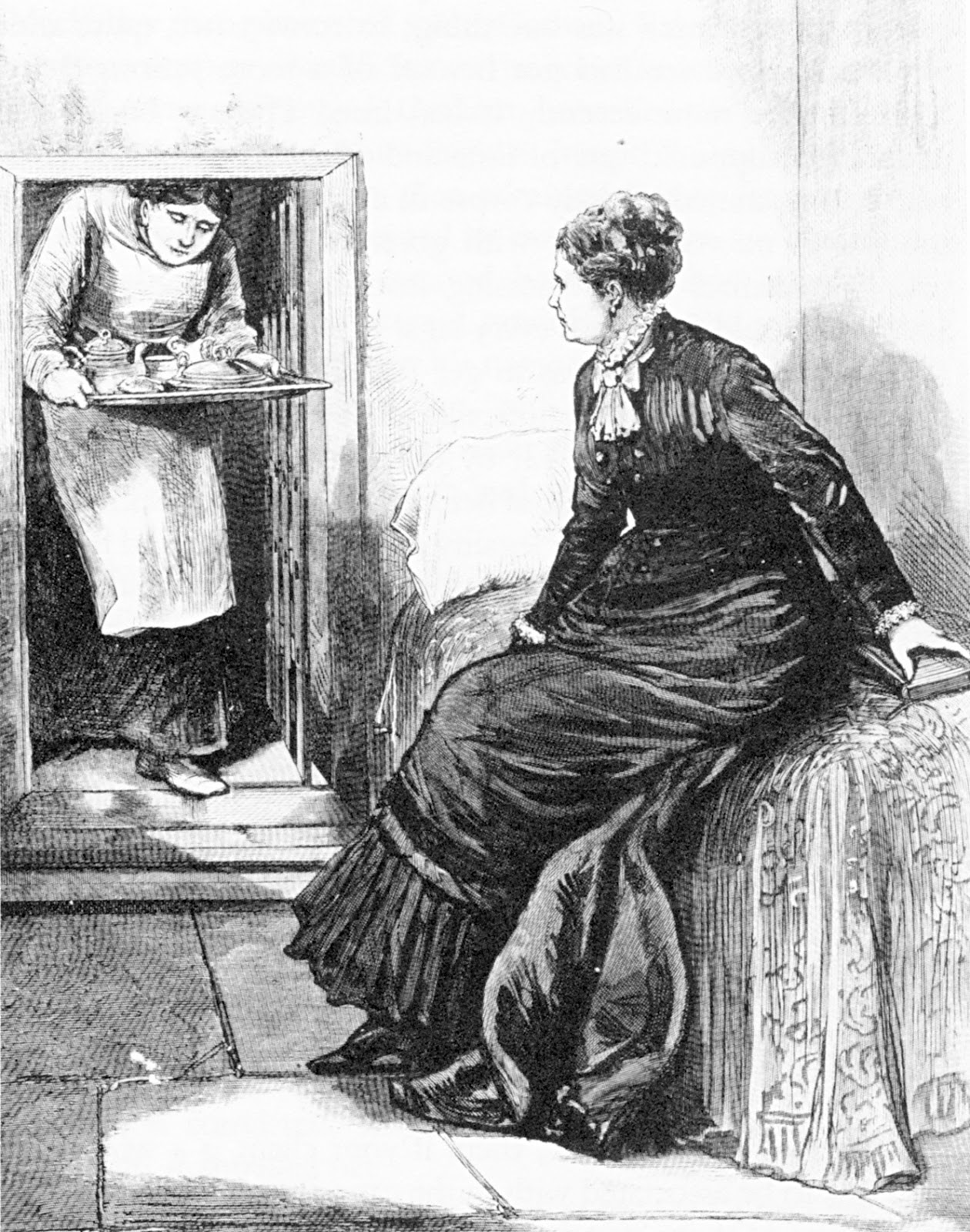
Even in prison, she was no stranger to controversy: her confinement was the subject of public censure. The press reported on her comfort while in jail, and it was implied that she had bribed the aldermen of New York who had allowed her to sleep on a featherbed and brought her a light for night reading. The public debate concerning Restell continued, and it was decried that she was thought while in jail to have "lived like a lady in confinement" instead of criminal. While she was incarcerated, the Grand Jury investigated the deputy keeper, whom they accused of having accepted bribes to house Restell in greater luxury than the other prisoners. There was no evidence of bribes to be found, though, and Restell remained at Blackwell's Island doing special sewing and confined to her own cell where she was fed three times a day, her room lit by night. But the ordeal proved too much for Restell, and when she was released she publicly avowed she would never go to jail again.


After being granted credit for the seven months minimal confinement she spent at the Eldridge Street Jail during the course of the appeals process, Madame Restell was released after having served less than five months on Blackwell’s Island. She emerged from prison in June of 1849, and promptly resumed business, not at her old Greenwich Street address, but at a new uptown residence on Chambers Street; a Federal-style brick building that was fearlessly ensconced in the immediate neighborhood of the city’s courts and law offices.  She escaped any further prosecution for some time, and although it was rumored that her apparent immunity was the result of bribes, it is just as likely that her clientele, mostly respectable, middle-class women, came from families reluctant to prosecute or to collude in surveillance. 
The practice of abortion was so widespread and publicly linked to Restell that the term "Restellism" was coined by the feminist journal The Revolution to refer to abortion, which it maintained was widespread among the fashionable in the dress circle.

Evidence given in a breach-of-promise case in 1854 suggests Restell and her husband were charging between $50 and $100 per abortion at this time.  The complainant in the case claimed to have had five abortions over a period of seven years, of which three were performed by Restell. At this time abortion in New York was a felony punishable by not less than one and not more than three years in prison. 

The mayor of New York, Jacob Westervelt, officiated at the wedding of her daughter, Caroline Summer, to Isaac Purdy in June 1853.

In an attempt to improve her image, she applied for United States citizenship—one had to be a “person of good character” to be approved—and was naturalized in 1854. 

In 1857, she and her husband purchased property on the northeast corner of Fifth Avenue and 52nd street, where they built a grand four story mansion that they publicly put on display during a lavish housewarming.  It had frontage of 41 feet on the Avenue; and was of brownstone trimmed with marble. Restell's presence became an embarrassment to the neighborhood. She was one of the few New Yorkers who could not buy her way into polite society with a Fifth Avenue address, a mansion, and fine horses. "There she has seated herself, in all the splendor of wealth, her great palace frowning down upon the street," wrote Leslie's Illustrated, "while inside Madame sits a pariah, amid velvets ....satin and rosewood, mirrors and bronzes, and longs for the sympathy and respect that all her wealth cannot buy, even in this city, where we are told it can buy anything."  It was claimed that Restell's mansion lowered real estate values nearby and that she flaunted her unwanted presence by taking an afternoon carriage ride everyday. Her stylish equipment and liveried coachmen were well known to all who frequented the Fifth Avenue promenade and Central Park Drives.

She was now so infamous nationwide that she was included in several guidebooks to the city, one of which dubbed her “the Wickedest Woman in New York.

The Civil War and its aftermath afforded her an ideal business climate, rife with all the vice and destitution that are normally associated with periods of armed strife.
”
It is estimated that by 1870 her annual expenditure on advertising alone was $60,000.  One ad for Restell's medical services, printed in the New York Sun, promised that she could offer the "strictest confidence on complaints incidental to the female frame" and that her "experience and knowledge in the treatment of cases of female irregularity, [was] such as to require but a few days to effect a perfect cure."  Another, addressed to married women, asked the question, "Is it desirable, then, for parents to increase their families, regardless of consequences to themselves, or the well-being of their offspring, when a simple, easy, healthy, and certain remedy is within our control?"  Advertisements for the "Female Monthly Regulating Pills" she also sold vowed to resolve "all cases of suppression, irregularity, or stoppage of the menses, however obdurate."

On the morning of April 1, 1878, a maid discovered Madame Restell in the bathtub at her Fifth Avenue home; she had slit her own throat with a pearl-handled knife. She was sixty-seven years old.

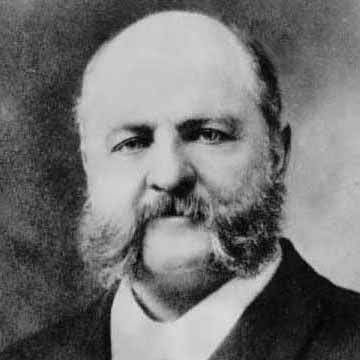
Anthony Comstock had visited Madame Restell two times in January 1878, purportedly to obtain contraceptive powders for his wife. 


Anthony Comstrock
On his third visit on February 7th, he came accompanied by the police, deputies, and reporters from the World and the Tribune.  Under a state law of 1875,  he produced a warrant to search the premises and seize any articles for miscarriage or the prevention of conception. After searching the entire house, they seized what was inventoried as "15 bottles of a ruby-colored medicine, 100 boxes of white pills, 500 packages of powders, 250 circulars, 3 syringes, and 10 dozen condoms."


Illustration of Comstock and Restell on February 7th
Restell was indicted, and her trial date was set for April 1, 1878.

In the interval between her arrest and her trial, on the advice of former judge and attorney Orlando Stewart, she had taken down the sign affixed to her building. In a statement indicating her own role in provoking the attacks upon her, when asked why she was persecuted, she replied, "They are envious because I have such a fine house in such a splendid location."  Through early March, she was in and out of the Tombs as various legal proceedings took place, the court going out of its way to be as punitive and uncompromising as possible as the gleeful press looked on.


Restell's Mansion on Firth Avenue
Although she could afford the best attorneys, Madame Restell was quite alone in the world. Her husband had died in January, 1877.  She was estranged from her daughter, who had married a policeman. Although her granddaughter, Caroline, had been her assistant, she too had married. Madame Restell wasn't assured of escaping imprisonment. The newspapers had a field day, denouncing her on a daily basis and gloating that she was finally going to get her due.


While courtroom observers gathered for the trial on April 1, 1878, they waited in vain. Rumors swept through the courtroom when Restell did not appear at the appointed time. It being April 1st, however, Anthony Comstock, like many others, dismissed rumors of her suicide as a joke.

At 5 PM, a coroner's jury was impaneled in Restell's bedroom adjacent to the bath. In addition to touring the house, reporters were allowed to view the remains which lay in an ice-chest in a small reception room north of the parlor-floor hallway. After hearing testimony, touring the house, and viewing the body, the jury reached a verdict of death by suicide.   When the jury viewed the remains, it was reported "When the black pall was drawn back, Ann Lohman's features seemed calm, kindly, and youthful, her bloodless face white as marble, her dark brown hair faintly tinged with gray, her throat traversed by a thin red line."

The next morning, in addition to detailed descriptions of the sumptuous house interior, the newspapers editorialized.  "A fit ending to an odious career," announced the Times; while the Tribune, declaring the "end of sin is death" labeled her suicide as an admission of guilt.   Only the Sun was generous, "whatever she was, she had her rights, and the man who cunningly led her into the commission of misdemeanor acted an unmanly and ignoble part." 

When Comstock heard of her suicide he called it "a bloody ending to a bloody life." Comstock denied any wrongdoing and justified his entrapment as necessary and defensible. His Society for the Suppression of Vice hailed the closing of her practice and insisted that the Society's agent had in no way seduced Restell into committing a crime.

Madame Restell was buried in the Sleepy Hollow Cemetery in Tarrytown, New York.


Restell's Grave

Upon her death, her fortune was claimed to have been worth between $500,000-$600,000 ($11.9 million-$14.3 million in present-day terms.)


Martin Delany, born May 6, 1812


Martin Robison Delany was born free in Charles Town, Virginia (later West Virginia) to Pati Peace and Samuel Delany.  Although his father, Samuel, was an enslaved carpenter, his mother was a free woman and a seamstress. 


Both sets of Martin Delany's grandparents were African.  Samuel's parents were of  Gola ethnicity (from modern-day Liberia), taken captive during warfare and brought as slaves to the Virginia colony. Family oral history said that his grandfather was a chieftain, escaped to Canada for a period, and died resisting slavery abuses.

Pati's parents were born in the Niger Valley, west Africa, and were of Mandinka  ethnicity. Her father was said to have been a prince named Shango, captured with his betrothed Graci and brought to America as slaves. After some time, they were given their freedom in Virginia, and Shango returned to Africa.  Graci stayed in America with their only daughter Pati.  

Having heard stories about his parents' ancestors, Martin wanted to visit Africa, which he considered his spiritual home.

When Martin was just a few years old, attempts were made to enslave him and a sibling. Their mother Pati carried her two youngest children 20 miles to the courthouse in Winchester to argue successfully for her family's freedom based on her own free birth.

As he was growing up, Martin and his siblings learned to read and write using The New York Primer and Spelling Book, given to them by a peddler.  Virginia prohibited education of black people.  When the book was discovered in September 1822, Pati took her children out of Virginia to Chambersburg in the free state of Pennsylvania to ensure their continued freedom. They had to leave their father, but a year later Samuel bought his own freedom and rejoined the family in Chambersburg.

In Chambersburg, the young Martin continued learning. Occasionally he left school to work when his family could not afford for his education to continue. 

In 1831, at the age of 19, he traveled 160 miles west by foot to the growing city of  Pittsburgh, where he became a barber and laborer. 

He was 49 years old when the Civil War began.

Pittsburgh, Pennsylvania 1830
Delany became a student of Reverend Lewis Woodson of the Bethel African Methodist Episcopal Church. 

Lewis Woodson
Afterward, he began attending Jefferson College, where he was taught classics, Latin and Greek by Molliston M. Clark.

Jefferson College
During the national cholera epidemic in 1833, Delany became apprenticed to Dr. Andrew N. McDowell, where he learned contemporary techniques of fire cupping and leeching, then considered the primary techniques to treat disease. He continued to study medicine under Dr. McDowell and other abolitionist doctors, such as Dr. F. Julius LeMoyne and Dr. Joseph P. Gazzam of Pittsburgh.

Delany became active in political matters. In 1835 he attended his first National Convention of Men of Color, held in Philadelphia since 1831. He was inspired to conceive a plan to set up a 'Black Israel' on the east coast of Africa. He also became involved in the temperance movement, and in organizations caring for fugitive slaves who had escaped to Pennsylvania, a free state.


In 1839, Delany toured Texas, Mississippi, Louisiana, and Arkansas, observing slave life.

While living in Pittsburgh, Delany met Catherine A. Richards, the daughter of a successful food provisioner, said to be one of the wealthiest families in the city. They married in 1843.  The couple had eleven children, seven of whom survived into adulthood.

William Lloyd Garrison
Delany began writing on public issues. In 1843 he began publishing The Mystery, a black-controlled newspaper. His articles and other writings were often reprinted in other venues, such as in abolitionist William Lloyd Garrison's The Liberator. 


His activities brought controversy in 1846, when he was sued for libel by "Fiddler" Johnson, a black man he accused in The Mystery of being a slave catcher. Delany was convicted and fined $650 — a huge amount at the time. His white supporters in the newspaper business paid the fine for him.

Frederick Douglass 
When Frederick Douglass and William Lloyd Garrison were in Pittsburgh in 1847 on an anti-slavery tour, they met with Delany. Together the men conceived the newspaper that became the North Star. 

It was first published later that year in Rochester, New York.  The business was handled by Douglass, while Delany traveled to lecture, report, and obtain subscriptions. During these travels, he was frequently confronted by mobs opposing his views, sometimes violently.


John McLean
In July 1848 Delany reported in the North Star that U.S District Court Justice John McLean had instructed the jury in the Crosswait trial to consider it a punishable offense for a citizen to thwart white persons' trying to "repossess" an alleged runaway slave. His coverage influenced abolitionist Salmon P. Chase to lead a successful drive to remove McLean as a candidate of the Free Soil Party for the Presidency later that summer.

Salmon P. Chase
Delany maintained his own cupping and leeching practice. In 1849 he began to study more seriously to prepare to apply to medical school. In 1850 he failed to be accepted to several institutions before being accepted to Harvard Medical School, after presenting letters of support from seventeen physicians. He was one of the first three black men to be admitted there.

The month after his arrival, however, a group of white students wrote to the faculty, complaining that "the admission of blacks to the medical lectures highly detrimental to the interests, and welfare of the Institution of which we are members." They stated they had "no objection to the education and elevation of blacks but do decidedly demonstrate against their presence in college with us." 


Within three weeks, Delany and his two fellow black students, were dismissed, despite dissenting opinion among students and staff at the medical school. Furious, Delany returned to Pittsburgh.

He became convinced that the white ruling class would not allow deserving persons of color to become leaders in society, and his opinions became more extreme. His book, The Condition, Elevation, Emigration, and Destiny of the Colored People of the United States, Politically Considered (1852) argued that blacks had no future in the United States.  He suggested they should leave and found a new nation elsewhere, perhaps in the West Indies or South America.


More moderate abolitionists were alienated by his position. Delany also criticized racial segregation among Freemasons.

As a response to Harriet Beecher Stowe's Uncle Tom's Cabin, in 1859 and 1862, Delany published parts of a novel, Blake: Or The Huts of America in serialized form. It portrayed an insurrectionist's travels through slave communities. He believed that Stowe had portrayed slaves as too passive, although he praised her highlighting the cruelty of Southern slave owners. Modern scholars have praised Delany's novel as an accurate interpretation of black culture.  This was the first novel by a black man to be published in the United States.

Delany worked for a brief period as principal of a colored school before going into practice as a physician. During another cholera outbreak in 1854, most doctors abandoned the city, as did many residents who could leave.  No one knew how the disease was caused nor how to control the epidemic. With a small group of nurses, Delany remained and cared for the victims.

In August 1854, Delany led the National Emigration Convention in Cleveland, Ohio.  Delany advanced his emigrationist argument in his manifesto "Political Destiny of the Colored Race on the American Continent". The convention approved a resolution stating, "[A]s men and equals, we demand every political right, privilege and position to which the whites are eligible in the United States, and we will either attain to these, or accept nothing." There were a significant number of women attendees who also voted for the resolution.

In 1856, Delany moved to Canada with his wife, Catherine, and their children. 


In May 1859, Delany sailed from New York for Liberia, to investigate the possibility of a new black nation in the region. He traveled in the region for nine months. He signed an agreement with eight chiefs in the Abeokuta region that would permit settlers to live on "unused land" in return for using their skills for the community's good.  The treaty was later dissolved due to warfare in the region, opposition by white missionaries, and the advent of the American Civil War.

Delany left Liberia in April 1860 for England, where he was honored by the International Statistical Congress. One American delegate walked out in protest. At the end of 1860, Delany returned to the United States. 

In 1861, he began planning settlement of Abeokuta. He gathered a group of potential settlers and funding. When Delany decided to remain in the United States to work for emancipation of slaves, the pioneer plans fell apart.
United States Colored Troops
In 1863 after Abraham Lincoln called for a military draft, Delany began recruiting black men for the Union Army.  His efforts in Rhode Island, Connecticut, and Ohio raised thousands of enlistees, many of whom joined the newly formed United States Colored Troops. 

Delany was granted an audience with Lincoln in February 1865. He proposed a corps of black men led by black officers who could serve to win over Southern blacks. Although a similar appeal by Frederick Douglass had already been rejected, Lincoln was impressed by Delany and described him as "a most extraordinary and intelligent man."

Delany was commissioned as a major a few weeks later, becoming the first black line field officer in the U.S. Army and achieving the highest rank an African American would reach during the Civil War. 

Martin Delany
After the war, he remained with the Army and served under General Rufus Saxton in the 52nd U.S. Colored Troops. 

Rufus Saxton
He was later transferred to the Freedman's Bureau, serving on Hilton Head Island, South Carolina.  He shocked white officers with his strong call for the right of freed blacks to own land. Later in 1865, he was mustered out of the Freedman's Bureau and shortly afterward resigned from the Army.


Delany spent most of the remainder of his life in South Carolina.  He continued to be politically active, and unsuccessfully sought various positions, such as the appointment as Consul General in Liberia and lieutenant governor of South Carolina. He was appointed as a Trial Justice in Charleston. 

In 1875 charges of "defrauding a church" were brought against him. He was convicted, forced to resign, and served some time in jail. Although pardoned by the Republican governor, Delany was refused his old job.

Delany then supported the Democratic candidate Wade Hampton in the next election. Partly as a result of black swing votes encouraged by Delany, Hampton was elected. He reappointed Delany as Trial Justice. 

In the later 1870s, the gains of the Reconstruction period began to be pushed back by more conservative elements. Paramilitary groups such as the Red Shirts suppressed black voting in South Carolina.

In reaction to whites' regaining power and the suppression of black voting, Charleston-based blacks started planning again for emigration to Africa. In 1877, they formed 'Liberia Exodus Joint Stock Steamship Company', with Delany as chairman of the finance committee. A year later, the company purchased a ship, the Azor, for the voyage. Delany worked as president of the board to organize the voyage.

In 1879, one of his sons, Charles Lenox Delany, drowned in the Savannah River.

Delany withdrew from the emigration project in 1880 to serve his family. Two of his children were students at Wilberforce College in Ohio, and required money for tuition fees.  His wife had been working as a seamstress to make ends meet. 
Delany began practicing medicine again in Charleston. 

He rejoined his family in Ohio in December 1884.  On January 24, 1885, he died of tuberculosis in Wilberforce, Ohio, at the age of 72.

Delany's Tombstone
He was buried in Massie's Creek Cemetery, in Xenia, Ohio.

Monument to Delany
"His was a magnificent life," W. E. B. DuBois wrote in 1936, "and yet, how many of us have heard of him?"

Monday, May 6, 2013

Cyrus Pringle, born May 6, 1838


Cyrus Guernsey Pringle was born on May 6, 1838 in East Charlotte, Vermont.  His ancestry on his father's side was Scottish Presbyterian.  His maternal grandfather, Asa Harris, was of Puritan stock.


His first horticultural undertakings were on his mother's farm in 1857, when at the age of nineteen, he budded a small seedling apple tree, with a large, striped, sweet summer apple.  In 1858 he started his first nursery, containing a small pear orchard, fruit yards, gardens of currants, cherries, grapes, peaches and potatoes. He made a plan for each orchard or garden, giving the name and location of each plant. 

By crossing, he obtained a new variety of potato seedling "No. 6 (1870)," which was called "Snowflake." This potato was introduced to the public in New York. Robert Fenn, an Englishman much interested in crossing American and English varieties of potatoes, recognized Pringle's ability and the two of them worked together on other projects, such as the crossing of "Snowflake" with "Rector of Woodstock" .

Cyrus studied in Vermont, and later in Quebec, Canada, before entering the University of Vermont in the year 1859, enrolling in the classical course. The death of his older brother, during his first semester, made it necessary for him to aid his widowed mother in the management of the farm and to leave college.


University of Vermont
In the early part of his life he became interested in the Society of Friends (Quakers). Through attending the meetings that he met Almira L. Greene of  Starksboro, Vermont, a school teacher and a speaker of the Friends.

He was 23 years old when the Civil War began.

Starksboro Village Meeting House, Vermont
He sold seedlings of lilies, gladioli and wheat. He grew more than 100 varieties of iris and nearly all the species of lilies. His Hubbard squash seeds brought a dollar a pound at one time, and he ran a "hospital" for bulbs.

Pringle and Almira Green married on February 25, 1863.

During the Civil War, about five months after his marriage, he, along with two other Vermont Quakers, was drafted into the Union Army on July 13, 1863.  They shared the Quakers' disapproval of war,.  When Pringle's uncle offered to pay the $300 commutation fee which would release him from serving, he would not allow it, regarding it as a selfish compromise with principle. 
“Asking no military protection of our Government and grateful for none, [we] deny any obligation to support so unlawful a system, as we hold war to be, even when waged in opposition to an evil and oppressive power and ostensibly in defence of liberty, virtue and free institutions.”
~ Cyrus Pringle
They refused to perform military duty. The three Friends were sent under guard to a military camp in Boston Harbour, "feeling very much like convicts." They were taken before the major in charge, who first argued with them and then confined them to the guardhouse. There they were among men who had taken part in the New York Draft Riots, who showed “hatred to the blacks… and exhibit this in foul and profane jeers heaped upon these unoffending men.” That night, sleeping on the floor and sharing one blanket between three, they were kept awake by a man suffering from violent delirium tremens.

President Abraham Lincoln wrote saying that although he sympathised with those in their situation, he felt bound by the Conscription Act and could only "detail them from active service to hospital duty or to the charge of coloured refugees". Other Quakers wrote that they might enter the hospital without compromising their principles. "Oh, the cruellest blow of all comes from our friends," Pringle wrote.

Eventually they were sent into active service in Virginia, where each man was supplied with a gun. When they refused, the equipment was buckled about them and they were marched through country "made dreary with the war blight". The guns "slipped down and dragged painfully on our shoulders". At the camp, they refused to present arms and were tied up and left for several hours, before being released and left to sleep on the ground.

On October 3, 1863, at Culpepper, Virginia, Pringle was staked to the ground, with his arms outstretched and his legs racked; he was left in this position for hours, until "so weak he could hardly walk or perform any exertion". He was even threatened with death if he would not give up.  His reply was, "It can but give me pain to be asked or required to do anything I believe to be wrong." After a day of extreme pain he wrote in his diary, "This has been the happiest day of my life, to be privileged to fight the battle for universal peace."


Isaac Newton
When Secretary of War Edwin Stanton heard of this treatment, he ordered "the three incorrigibles" sent to Washington, D.C..  Isaac Newton, Commissioner of Agriculture, went to President Abraham Lincoln about their case, and the President asked Secretary Stanton to release them. Stanton refused, claiming that his oath of office stood in the way of giving them a discharge.  Finally, on the November 7, they were released on parole from service at the "urgent wish" of President Lincoln himself. 


Edwin Stanton


By this time, Pringle was quite ill and the journey home led to a "delirium from which I only recovered after many weeks, through the mercy and favour of Him, who in all this trial had been our guide and strength and comfort."

After recovering his health, Pringle again turned his energies to plant breeding, attempting to hybridize new varieties of fruit and corn, tomatoes, and grains such as wheat and oats.  

He studied Spanish and French by himself.

In the 1870s, Pringle began to collect plants throughout Vermont.  In December 1874, he was appointed to the Vermont Board of Agriculture, which meant an itinerant agricultural professorship.  Charles James Sprague, of the Boston Natural History Society, asked Pringle to collect lichens, and Doctor Peck desired him to obtain fungi.  During three successive years he took boat trips up the lower St. Lawrence, to the Saguenay, a river in Canada, and the St. Francis and St. John Rivers of northern Maine.

In 1872 Pringle's wife separated from her husband to pursue evangelistic work.  She wanted her husband to join with her, going from place to place. He refused, believing he had neither taste nor talent for this work. She, being in ill health, was persuaded that it would be easier to live with her own mother than with her husband's.  

They divorced on October 16, 1877.  By settlement Mrs. Pringle received $2,000 and custody of their only child, Annie.

In 1878, he displayed many of the Vermont specimens which he had been collecting, at the Paris Exposition.  In 1880, he was named as botanical collector for the American Museum of Natural History.   He was also an agent for the United States Census Department,  to explore the forests and to collect data for a final report.


American Museum of Natural History
In 1884, he made a botanical survey of the north and northwestern portions of Arizona, under the auspices of the Smithsonian Institution.  This later branched into a 26-year survey  of Mexico. He was able to make these sojourns in Mexico through an appointment as botanical collector for the Gray Herbarium with a maximum salary of $800 from the Herbarium, and $200 from the Harvard Botanical Museum.

After his eleventh trip to Mexico, he had botanized more or less thoroughly in twenty-one out of the twenty-seven states of the Mexican Union, having covered particularly Coahuila, Nuevo Leon, San Luis Potosi, Jalisco, Michoacan and Oaxaca.  About 1888 the Mexican Medical Institute engaged him for work in northern Mexico, in connection with his regular profession. 


Pringle collecting specimens in the field
He was a correspondent with some fifty or sixty museums. His plants went, outside of North America, to the British Museum, Kew Gardens, Edinburgh; to German, Swiss, South African and Austrian museums and universities; and to distant Melbourne, Calcutta,and museums in South America.

During his thirty-five years of field work in the United States, Canada and Mexico, he distributed to herbaria over 500,000 specimens, embracing some 20,000 species, about 12 per cent of which were new to science.

His memory for plant names and their visual specific characters was the key factor to his very low amount of "number duplication"; he remembered the "where and when" of practically every one of his many thousands of species, and gave a new number
to a plant only to register a variation or a new habitat. He liked to boast that he could call over 10,000 plant acquaintances, and a few botanical friends, by their proper names—though he was not certain as to who the president in Washington might happen to be.

In 1894, Pringle's mother died, and Mr. and Mrs. Frank Estey lived with him, keeping house while he was away on the Mexican trips.

In April, 1896, he was elected a member of the New England Botanical Club, within the first year of its existence. He became vice-president and charter member of the Vermont Botanical Club.  At a meeting of the Botanical Club in the later years of his life, Pringle closed a report he made with the following words: 
"But year by year I have learned with joy and pride of the achievements since made in this field of my youthful love by you, my associates, who began better prepared than I did (for I was only the first available man). Yet share the secret of success of an old collector, quit the broad plains of dull sameness, seek out every possible situation of exceptional character, and look to find amidst peculiar conditions rare and localized plants."
In 1902, through the efforts of Dr. L. R. Jones, then professor of botany, Pringle's herbarium was removed to Williams Science Hall at the University of Vermont, where the entire top floor was given over to him, and arrangements were made whereby it became the property of this University, under his charge and control during the remainder of his life. 


Pringle at the University of Vermont
Ten thousand dollars was subscribed for the Pringle Herbarium by cash gifts or promissory pledges. He received $600 a year salary from the University, in quarterly payments, beginning July 1, 1902, and continuing until his death.

In the last year of his life he talked of planning a trip to South America, but was unable to realize that dream.

He died on May 25, 1911 at the age of 73. He was buried in Morningside Cemetery, Charlotte, Vermont.

Morningside Cemetery, Charlotte, Vermont

Saturday, May 4, 2013

Lorinda Anna Blair Etheridge Hooks, born May 3, 1839


Lorinda Anna Blair was born May 3, 1839 in Detroit, Michigan, the only child of her parents.  Her mother died when Anna was young, and she moved with her father  to Milwaukee, Wisconsin.

Anna married her first husband, David Kellogg, when she was a teenager; nothing is known about him.  She married her second husband, James Etheridge in 1860.  Some accounts say that he enlisted in the army and was killed; others that the marriage was not a success, and that she had left him before the war began. 

Anna worked briefly in a hospital with a poor reputation for patient care, which she attempted to improve.

She was 22 years old when the Civil War began.

Detroit, Michigan
When the Civil War began, Etheridge, who was living in Detroit, joined the 2nd Michigan Volunteer Regiment as a vivandiere and nurse.  Many of the vivandieres would serve in purely ceremonial roles, outfitted in feminine versions of the uniforms of their regiments 
(bloomers, which featured a dress over full trousers). Etheridge served as a laundress and was known as "Gentle Annie" and later "Michigan Annie." She was also known as “Ethridge,” and “Lorinda Blair.”

2nd Michigan Volunteer Regiment
After a period of training the 2nd Michigan shipped out for Washington, D.C. to join the Potomac Army. When the 2nd Michigan first saw action at Blackburn's Ford, Etheridge was reported to have nursed the wounded and to have brought water to the dying. She served with the Regiment throughout its battles, including both battles at Bull Run. 

Etheridge served as an army nurse on hospital transports during the winter of 1861-1862, working under under Amy M. Bradley.

Amy M. Bradley
It was at the Second Battle of Bull Run that she came to the attention of General Philip Kearny.  She had almost been captured while attending to the wounded.  Kearny recommended she be given a horse.

Philip Kearny
After the Battle of Antietam, the 2nd Michigan was relocated to the Army of the West.  Etheridge transferred to the 3rd, and later 5th, Michigan Regiments in order to stay with the Army of the Potomac. 

At the Battle of Chancellorsville in spring of 1863, Etheridge was wounded in the hand when a Union officer attempted to hide behind her horse.  He was ultimately killed and her horse was also wounded. 

Battle of Chancerllorville
In July at the Battle of Gettysburg, General Clair A. Mulholland recalled observing Annie during the second day at Gettysburg during fighting around the peach orchard. “Amidst cannon shot that was throwing up loose dirt around the farm … a woman on horseback and in uniform galloped back from the line of battle, asked for some information, and quickly returned to the front again. She was a nurse of the Third Corps, Anna Etheridge and was directing the removal of the wounded. She was cool and self-possessed and did not seem to mind the fire.”

Etheridge was still with the Regiment in 1864 when it entered into the Wilderness and Spotsylvania campaigns in Virginia.  In 1864, General Grant issued an order that all women in the army have to get back, and Etheridge had to leave her Regiment. A petition was sent to the commander to have her stay, but she went to City Point, Virginia.  She continued her work of serving the soldiers from City Point.

The Detroit Free Press of June 9, 1864, reported the observations of Mrs. Jessie Hinsdill who served as a nurse during the war, apparently with the 2nd Michigan. Mrs. Hinsdill “speaks in glowing terms of her co-laborer, Miss Anna Etheridge, of this state, who has already become famous in the discharge of her angelic duties as hospital nurse. Her name will be cherished and remembered by many a suffering soldier to the latest hour of their lives.” 

Civil War Illustration of Etheridge
”When camped near Jeffersonville, Indiana July 5, 1865, just before our return home. I was presented with an official copy of the battles which we had participated in, nearly every one of which I had been with my command giving my services as a nurse.”
~ Annie  Etheridge
The document lists her as participating in 32 battles.

Etheridge returned to Detroit with her Regiment at the war's end until mustered out in July 1865.

For her courage under fire, Etheridge was one of only two women awarded the Kearny Cross, named in honor of Gen. Kearney. During that era there were few officially recognized decorations, other than the Medal of Honor, first awarded on March 25, 1863. However, on March 13, 1863 Brig. Gen. David B. Birney, Kearny's replacement, issued an order to the effect that a "Cross of Valor to be known as the 'Kearney Cross', would be bestowed upon such non-commissioned officers and privates who most distinguished themselves in battle."

Kearney Cross
After the war she married on March 1, 1870, for a third and last time to Charles E. Hooks, a corporal with the 7th Connecticut Infantry in the war. She worked for a while as a clerk in the United States Treasury Department. Eventually she received a monthly pension of $25 for her unpaid military service. 

She died on January 23, 1913 at Georgetown Hospital, Washington, D.C., at the age of 73.

 She was buried with veteran's honors in Arlington National Cemetery, next to her husband. 

Hooks Grave in Arlington Cemetery